Chinese Culture
Start Here: Basic Mandarin for Your First Trip to China
A calm first lesson in Mandarin for travelers: pinyin, tones, polite phrases, numbers, and the habits that make communication easier.
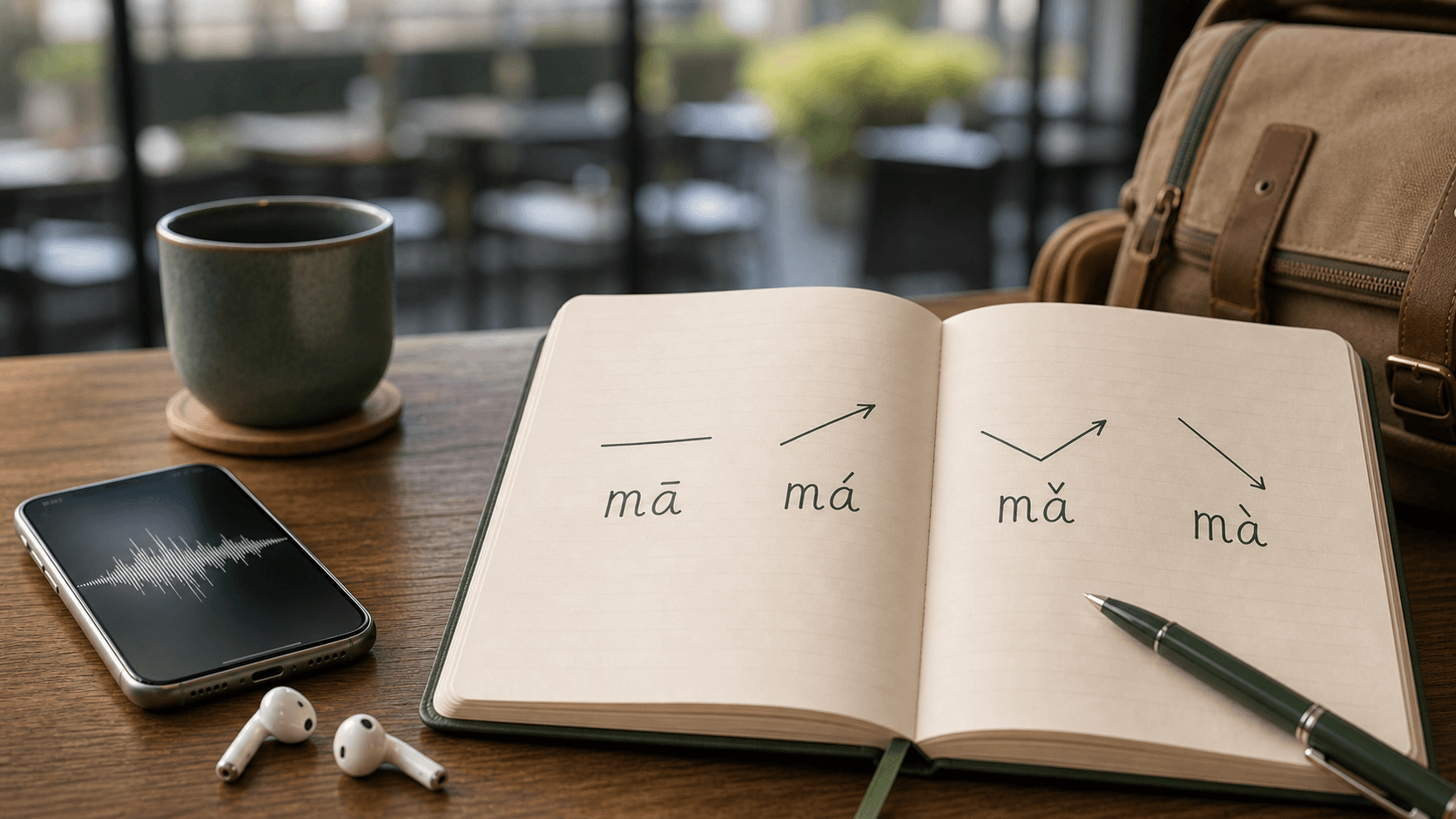
- Best for
- First-time travelers who want one practical Mandarin starting point
- May change
- Local wording, regional pronunciation, and translation app quality
You do not need to study Mandarin like an exam before your first trip. You need a small, reliable toolkit: a few polite phrases, numbers, place words, and the confidence to show written Chinese on your phone.
What to learn first
Start with the situations that happen during the first day of a trip:
- greeting hotel staff
- showing a booking or address
- finding an exit or restroom
- buying a ticket
- pointing to food
- asking for help
- saying that you do not understand
Long sentences can wait. A short phrase used at the right moment is more valuable.
Mandarin, characters, and pinyin
Mandarin Chinese is commonly called 普通话 — pǔ tōng huà — Putonghua. You will see Chinese characters everywhere. As a beginner, use pinyin as your pronunciation bridge.
Pinyin writes Mandarin sounds with Roman letters. For example:
- 你好 — nǐ hǎo — Hello.
- 谢谢 — xiè xie — Thank you.
- 请问 — qǐng wèn — Excuse me, may I ask.
Pinyin is helpful, but do not depend on pinyin alone. Save the Chinese characters too. If pronunciation fails, you can point to the written phrase.
Why tones matter
Mandarin uses pitch to distinguish meaning. Pinyin tone marks show the pitch pattern:
- First tone: high and flat, as in mā.
- Second tone: rising, as in má.
- Third tone: low or dipping, as in mǎ.
- Fourth tone: falling and firm, as in mà.
- Neutral tone: short and light.
Tones matter, but travelers do not need perfect pronunciation before speaking. Say short phrases slowly, listen to reliable audio when possible, and keep the Chinese sentence visible on your phone.
Your first polite phrases
- 你好 — nǐ hǎo — Hello.
- 谢谢 — xiè xie — Thank you.
- 再见 — zài jiàn — Goodbye.
- 不好意思 — bù hǎo yì si — Excuse me, or sorry to bother you.
- 对不起 — duì bu qǐ — Sorry.
- 请问 — qǐng wèn — Excuse me, may I ask.
- 请帮我一下。— qǐng bāng wǒ yí xià. — Please help me.
- 我听不懂。— wǒ tīng bù dǒng. — I do not understand.
- 请说慢一点。— qǐng shuō màn yì diǎn. — Please speak more slowly.
- 请发短信。— qǐng fā duǎn xìn. — Please send a text message.
Numbers you will use every day
- 一 二 三 四 五 — yī, èr, sān, sì, wǔ — 1, 2, 3, 4, 5.
- 六 七 八 九 十 — liù, qī, bā, jiǔ, shí — 6, 7, 8, 9, 10.
- 十一 — shí yī — 11.
- 二十 — èr shí — 20.
- 一百 — yì bǎi — 100.
- 一千 — yì qiān — 1,000.
Numbers appear in prices, departure times, train numbers, hotel floors, gates, and subway exits. Learn them early.
Three layers of backup
Use spoken Mandarin together with:
- a screenshot of your hotel name and address in Chinese
- your booking, map pin, or ticket screen
- a translation app for anything complicated
Your goal is not perfect grammar. Your goal is a calmer trip.
What to read next
Continue with the scenario guides in this section:
- transport: airport, taxis, buses, metros, trains, and high-speed rail
- hotel check-in and phone calls
- food, shopping, and payment
- health, police, and urgent problems
Think of Mandarin as a travel key, not an exam.
Next step
Keep practical Mandarin on your phone
The first-time travel pack includes phone-friendly Mandarin phrase cards for airport, transport, hotel, food, payment, health, and urgent situations.
Sources and reference checks
- Beginner Mandarin learning references
- Travel Chinese phrase references
- 《300词畅游中国》
Conversation
Questions and comments
Share a question, correction, or reading note. Most comments appear automatically. Some are held briefly for review.
Need a private reply? Email chiyaoyaoya@gmail.com.
Loading comments...