Destinations in China
Shanghai for First-Time Visitors
A first Shanghai guide that introduces the city's most characteristic sights so travelers can choose their own route.
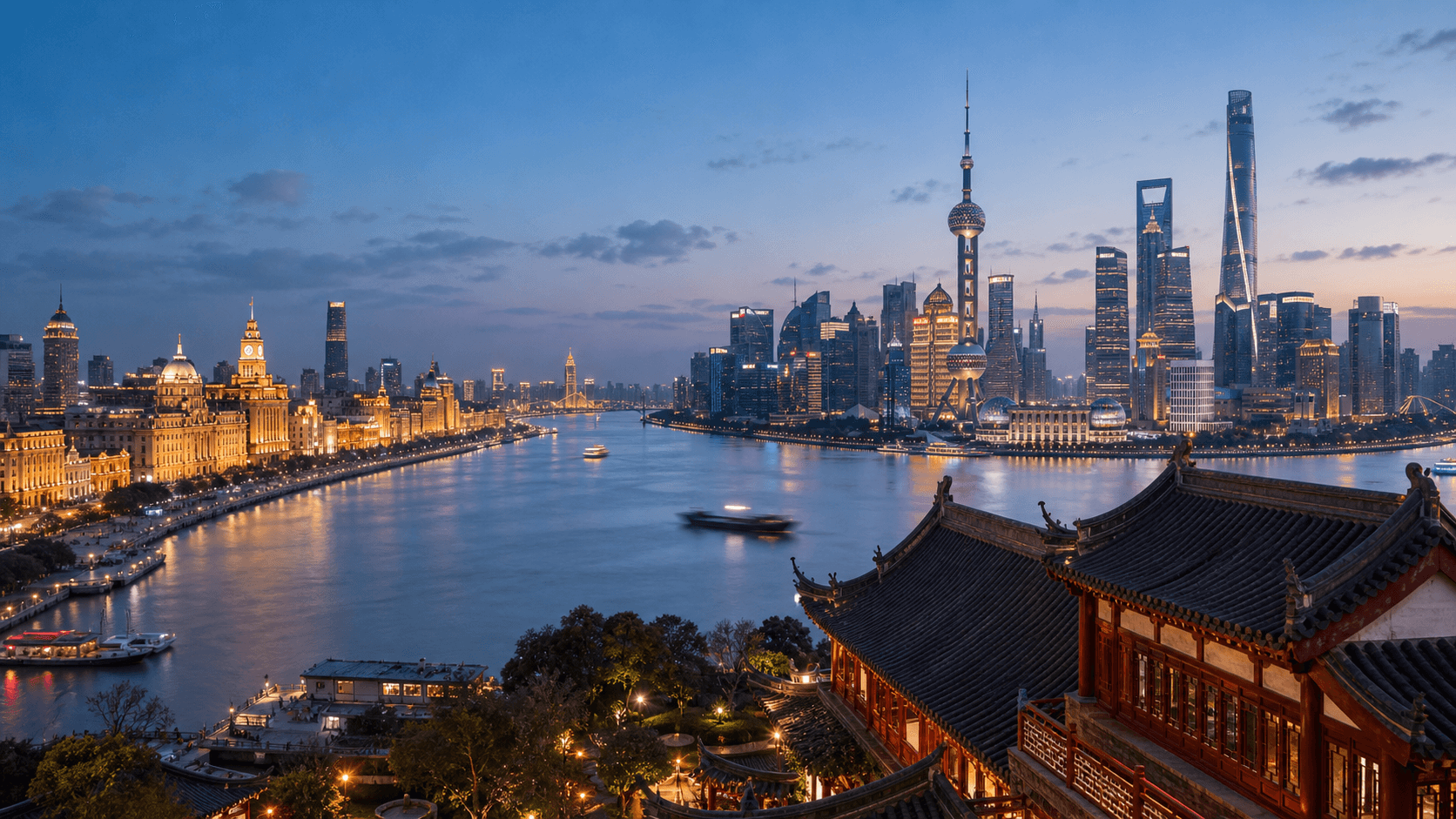
- Best for
- Travelers who want waterfront views, classical gardens, historic streets, museums, food, and modern city energy
- May change
- Attraction opening hours, ticketing, museum reservations, seasonal events, and transport details
How to Use This Shanghai Guide
Shanghai is easier to enjoy when you do not force it into a fixed itinerary. Use this page as a menu of the city's most characteristic places. Pick the sights that match your interests, then group nearby places together by metro line, neighborhood, and energy level.
Each section keeps the English name first and the Chinese name in parentheses, because local signs, map apps, ride-hailing pickup points, and metro stations often use the Chinese wording.
The Bund (外滩)
The Bund (外滩) sits on the west bank of the Huangpu River (黄浦江) in central Shanghai. It is about 1.5 kilometers long and is one of the city's most symbolic public landmarks.
Stand on the Bund and you see two versions of Shanghai at once. On one side is the famous group of 52 historic buildings known as the International Architecture Exhibition (万国建筑博览群): Gothic, Baroque, and classical revival facades line the road, including the Bank of China Building (中国银行大楼), Peace Hotel (和平饭店), Customs House (海关大楼), and former HSBC Building (汇丰银行大楼). Together they preserve the memory of Shanghai's old "Wall Street of the Far East" (远东华尔街).
Across the river is Lujiazui (陆家嘴), where the Oriental Pearl Tower (东方明珠塔), Shanghai Tower (上海中心大厦), Shanghai World Financial Center (上海环球金融中心), and Jin Mao Tower (金茂大厦) form the modern skyline. The Bund is free, open as a public waterfront, and useful at any time of day, although crowd control can change during major holidays and events.
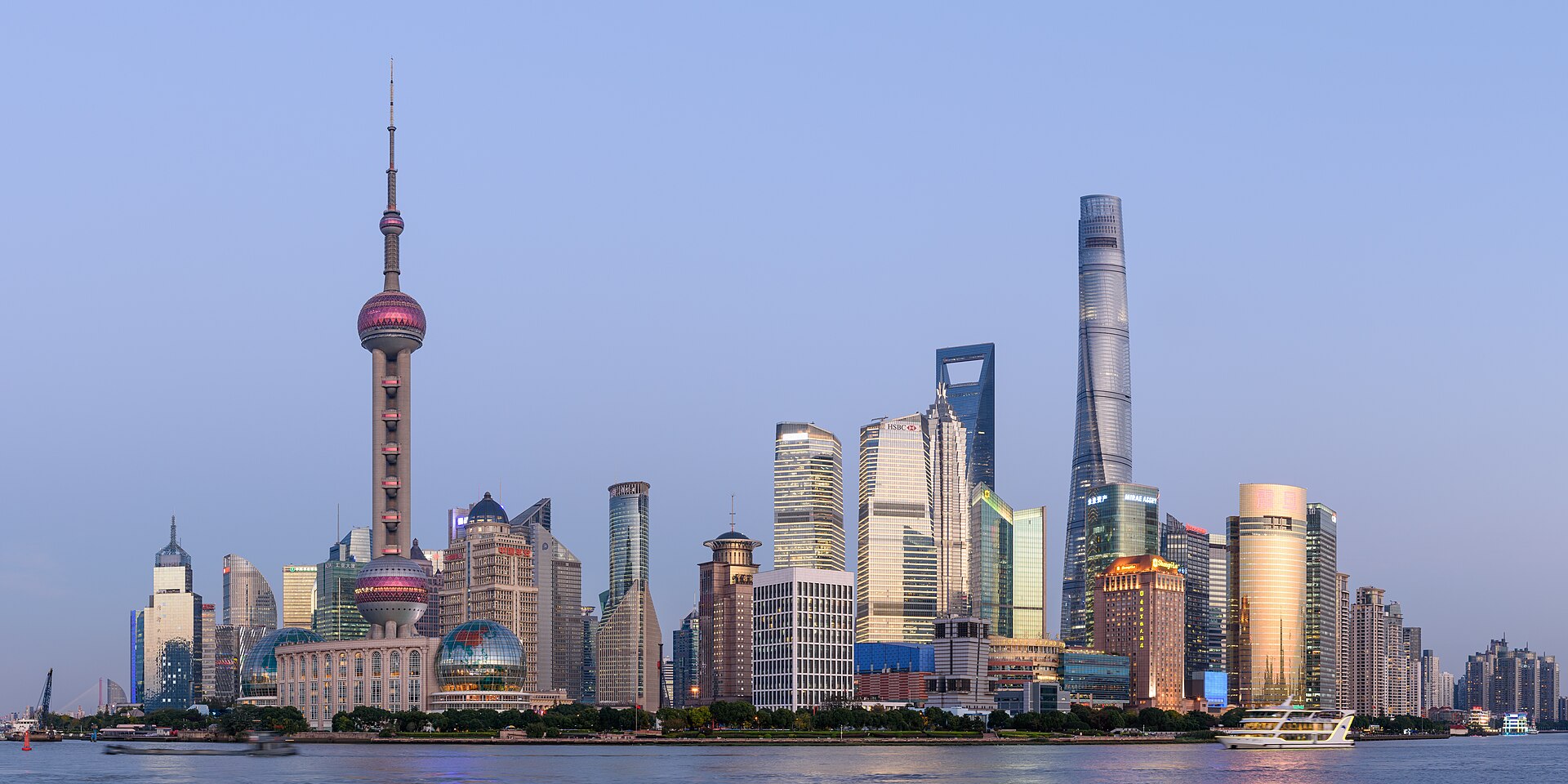
Photo: Wikimedia Commons, Wikimedia Commons contributor, open license.
Address: Zhongshan East 1st Road, Huangpu District (上海市黄浦区中山东一路). The classic waterfront section runs from Waibaidu Bridge (外白渡桥) in the north to Jinling East Road (金陵东路) in the south.
Nearest metro: East Nanjing Road Station (南京东路站), Shanghai Metro Line 2 and Line 10 (地铁2号线 / 10号线).
Lujiazui and the Pudong Skyline (陆家嘴与浦东天际线)
Lujiazui (陆家嘴) is the modern financial district directly across the Huangpu River (黄浦江) from the Bund (外滩). It is where many first-time visitors go when they want the close-up version of the skyline they saw from the riverfront.
You can treat Lujiazui as a visual contrast to the Bund rather than a separate checklist. Some travelers choose an observation deck, while others simply walk around the elevated pedestrian areas, malls, and riverfront viewpoints. If you want only one classic Shanghai photo, the Bund view toward Lujiazui is usually stronger. If you want to stand inside the skyline, come here.
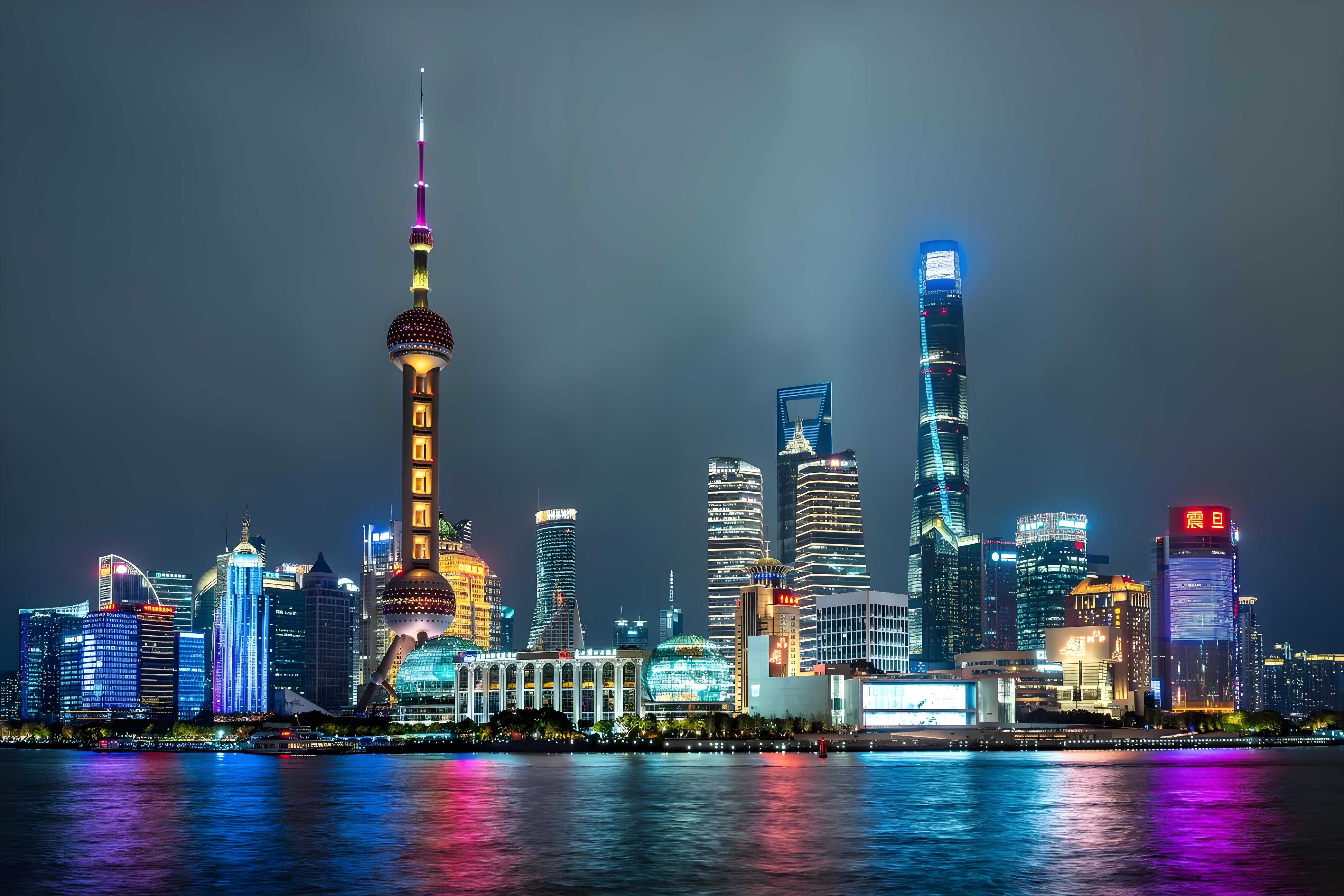
Photo: Local reference image provided for this guide.
Address: Lujiazui financial district, Pudong New Area (上海市浦东新区陆家嘴金融区).
Nearest metro: Lujiazui Station (陆家嘴站), Shanghai Metro Line 2 (地铁2号线).
Yuyuan Garden (豫园)
Yuyuan Garden (豫园) is in the northeast of Shanghai's old city area (老城厢), next to City God Temple (城隍庙) and Yuyuan Bazaar (豫园商城). It is one of the outstanding examples of Jiangnan classical garden design (江南古典园林). In 1982, Yuyuan Garden was listed as a Major Historical and Cultural Site Protected at the National Level (全国重点文物保护单位).
The garden was first built during the Jiajing reign of the Ming dynasty (明嘉靖年间), beginning in 1559. Its owner, Pan Yunduan (潘允端), served as a provincial administration commissioner in Sichuan (四川布政使). He built the garden over more than 20 years so his father could enjoy a peaceful old age. The name "Yu" (豫) suggests peace, comfort, and happiness, so Yuyuan can be understood as a garden made to bring joy and ease to one's parents.
The garden covers about 2 hectares. Pavilions, ponds, carved rocks, old trees, and winding corridors create the classic "large world in a small space" feeling of Jiangnan gardens. Historic sites inside and around the garden include Cangshu Lou (藏书楼), connected with the origins of the Shanghai School of painting and calligraphy (海派书画), and Dianchun Hall (点春堂), once used by the Small Sword Society uprising (上海小刀会起义).
Yuyuan Garden is one of the best places to feel Shanghai's older urban roots. The outer bazaar is generally free to walk through, while the inner garden is ticketed. The surrounding area is also famous for long-established food names such as Nanxiang Steamed Bun Restaurant (南翔馒头店) and Lubolang Restaurant (绿波廊).
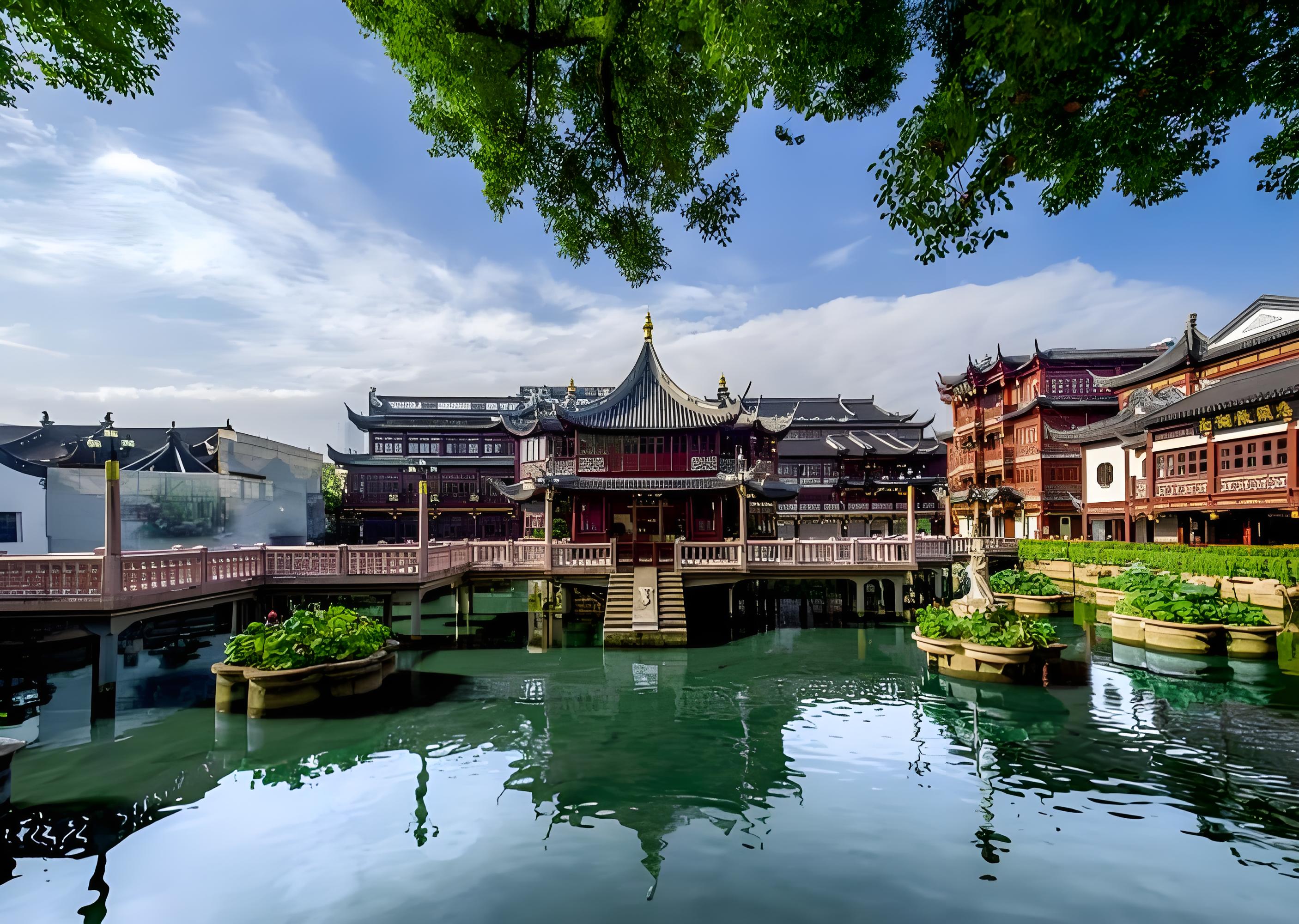
Photo: Local reference image provided for this guide.
Address: No. 218 Anren Street, Huangpu District (上海市黄浦区安仁街218号), near City God Temple (城隍庙) and Yuyuan Bazaar (豫园商城).
Nearest metro: Yuyuan Garden Station (豫园站), Shanghai Metro Line 10 and Line 14 (地铁10号线 / 14号线).
Nanjing Road Pedestrian Street (南京路步行街)
Nanjing Road Pedestrian Street (南京路步行街) is in central Huangpu District (黄浦区). It runs roughly 1.5 kilometers from the Bund (外滩) in the east to People's Square (人民广场) in the west, and is one of Shanghai's oldest and best-known commercial streets.
Its history reaches back to the mid-19th century. By the 1850s, carriage traffic and foreign settlement activity helped the road become increasingly prosperous. In 1908, Shanghai's first tram route was laid along Nanjing Road, connecting Jing'an Temple (静安寺) with the Bund (外滩), which pushed the street into a faster period of commercial growth.
In the early 20th century, the "four great department stores" (四大百货公司), Sincere (先施), Wing On (永安), Sun Sun (新新), and The Sun (大新), opened along Nanjing Road. They helped introduce modern department-store culture to Shanghai, including escalators and air conditioning, and strengthened the road's reputation as China's leading commercial street (中华商业第一街).
The pedestrian street officially opened in 1999 and was later extended eastward toward the Bund. Today it mixes modern shopping centers, old European-style buildings, bright signs, and heavy evening foot traffic. The small sightseeing tram known as the dangdang car (铛铛车) is designed to recall the atmosphere of old Shanghai trams.
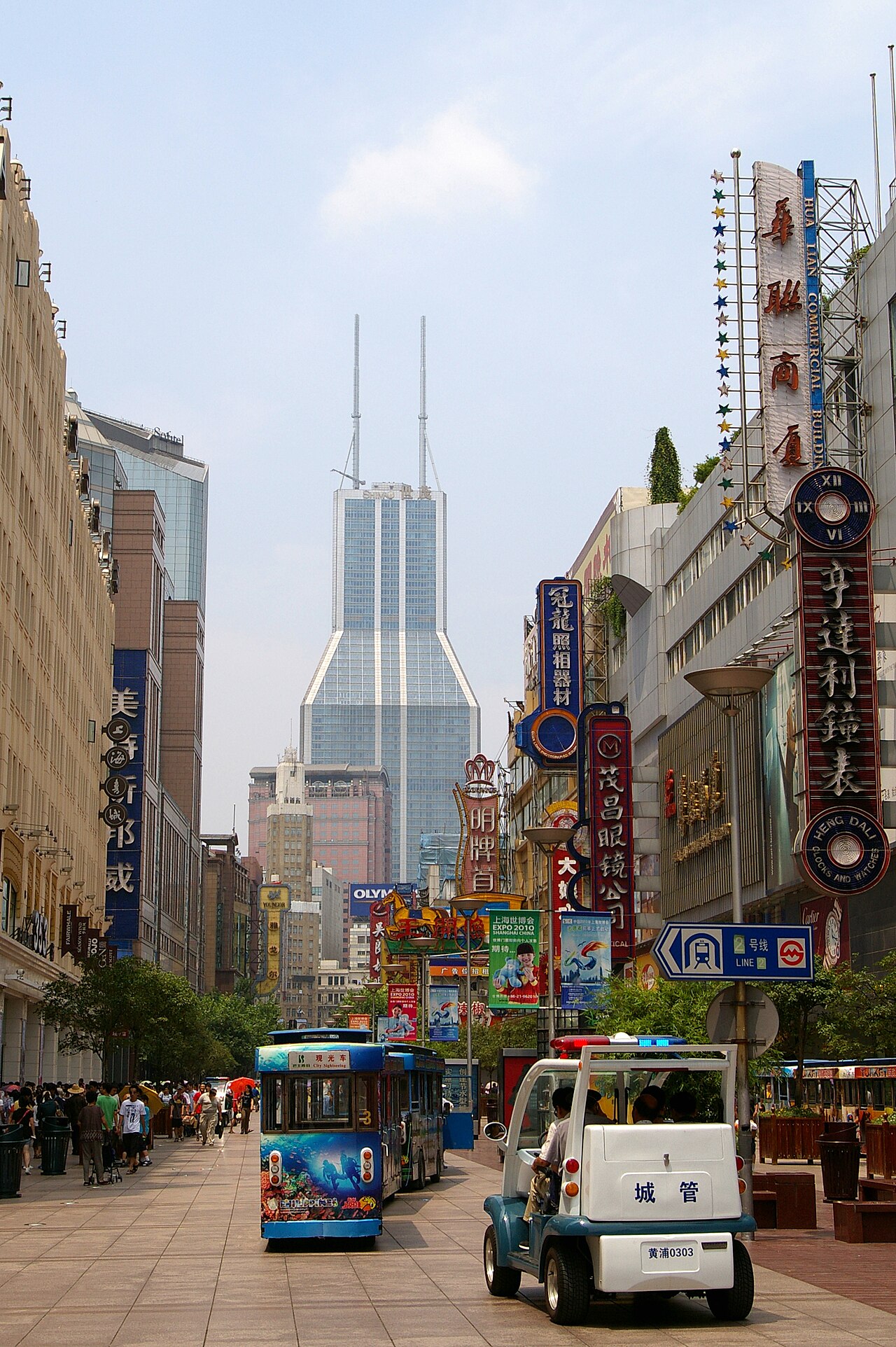
Photo: Wikimedia Commons, Wikimedia Commons contributor, open license.
Address: From Zhongshan East 1st Road at the Bund (外滩中山东一路) to Xizang Middle Road near People's Square (人民广场西藏中路), Huangpu District (黄浦区).
Nearest metro: East Nanjing Road Station (南京东路站) or People's Square Station (人民广场站).
Wukang Road Architecture Walk (武康路建筑步行街)
Wukang Road (武康路) is in Xuhui District (徐汇区). It runs about 1,183 meters from Huashan Road (华山路) in the north to Huaihai Middle Road (淮海中路) in the south. In 1914, the road became part of the French Concession (法租界). Because it sat deep inside that quiet concession area, shaded by plane trees and lined with garden houses and high-end apartments, it became associated with officials, cultural figures, and prominent residents.
The best-known landmark is Wukang Mansion (武康大楼), at the junction of Wukang Road (武康路) and Huaihai Middle Road (淮海中路). Built in 1924 and designed by the Hungarian-Slovak architect Laszlo Hudec (邬达克), it is one of Shanghai's early modern apartment buildings. Its narrow, ship-like triangular form and French Renaissance details make it one of the city's most photographed residential buildings.
Wukang Road has around 30 former residences and protected historic buildings. Notable stops include the Former Residence of Huang Xing at No. 393 Wukang Road (武康路393号黄兴故居), now used as the Wukang Road Tourist Information Center (武康路旅游咨询中心), the Former Residence of Ba Jin at No. 113 Wukang Road (武康路113号巴金故居), and the Memorial Residence of Soong Ching Ling at No. 1843 Huaihai Middle Road (淮海中路1843号宋庆龄故居纪念馆). Many buildings are still residential, so this is mainly an exterior-viewing walk.
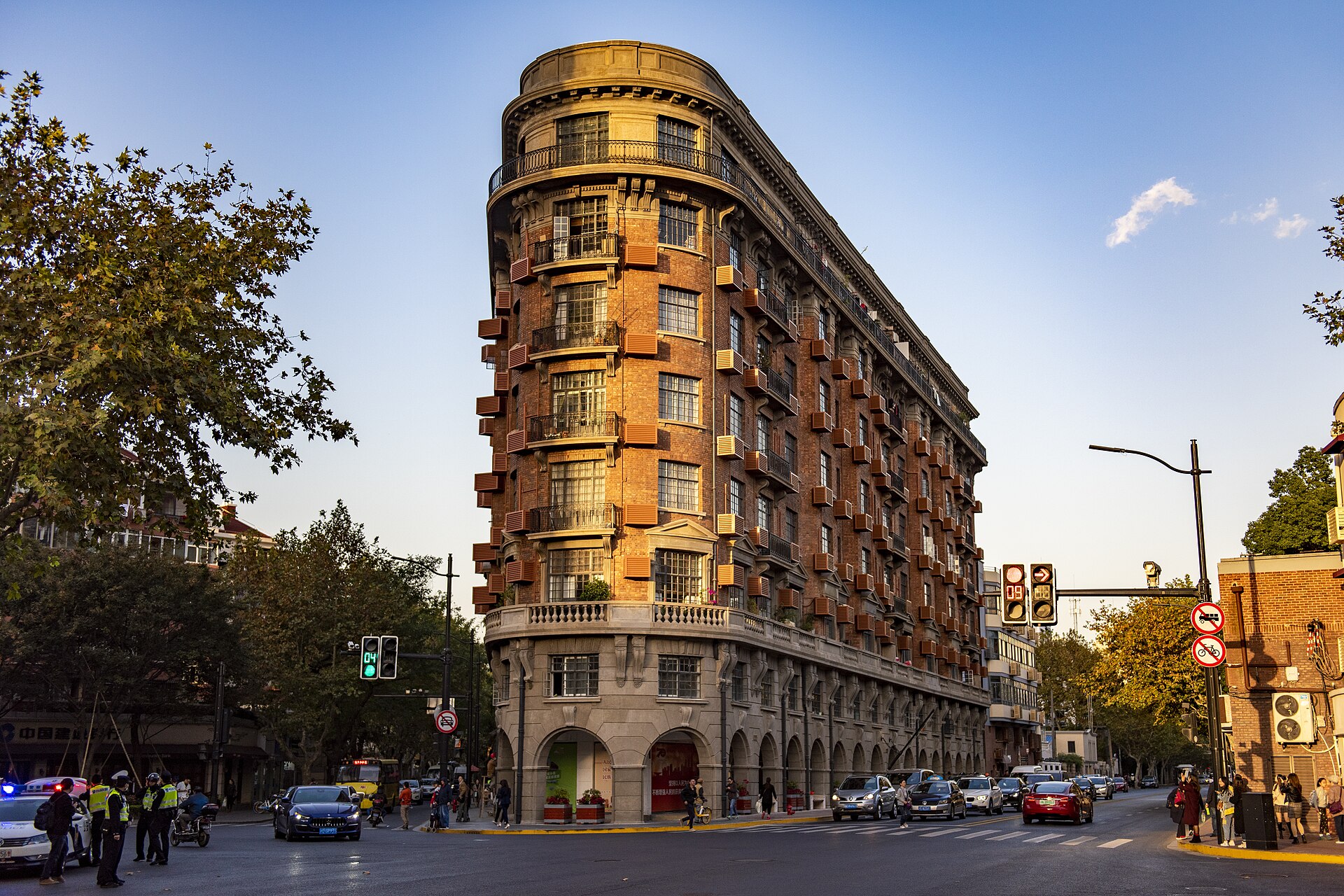
Photo: Wikimedia Commons, Wikimedia Commons contributor, open license.
Address: Wukang Road, Xuhui District (上海市徐汇区武康路), running from Huashan Road (华山路) to Huaihai Middle Road (淮海中路).
Nearest metro: Shanghai Library Station (上海图书馆站), Jiaotong University Station (交通大学站), or Hengshan Road Station (衡山路站), depending on your walking route.
Xintiandi (新天地)
Xintiandi (新天地) is one of Shanghai's most representative international-style commercial districts. It sits near Huaihai Road (淮海路) and was redeveloped through a project led by Shui On Group (香港瑞安集团) and Shanghai Fuxing Construction Development Co., Ltd. (上海复兴建设发展有限公司).
Its main idea is the blend of old and new. The area preserves the exterior walls, bricks, and lane-house appearance of century-old shikumen buildings (石库门建筑), while the interiors have been rebuilt for high-end restaurants, designer shops, boutique cafes, and bars. This makes Xintiandi an easy place to experience a polished version of Shanghai's lane-house architecture without sacrificing comfort, food options, or evening safety.
Nearby, the Site of the First National Congress of the Communist Party of China (中国共产党第一次全国代表大会会址 / 中共一大会址) gives the area a historical layer beyond dining and shopping. Check its current reservation rules separately if you plan to enter.
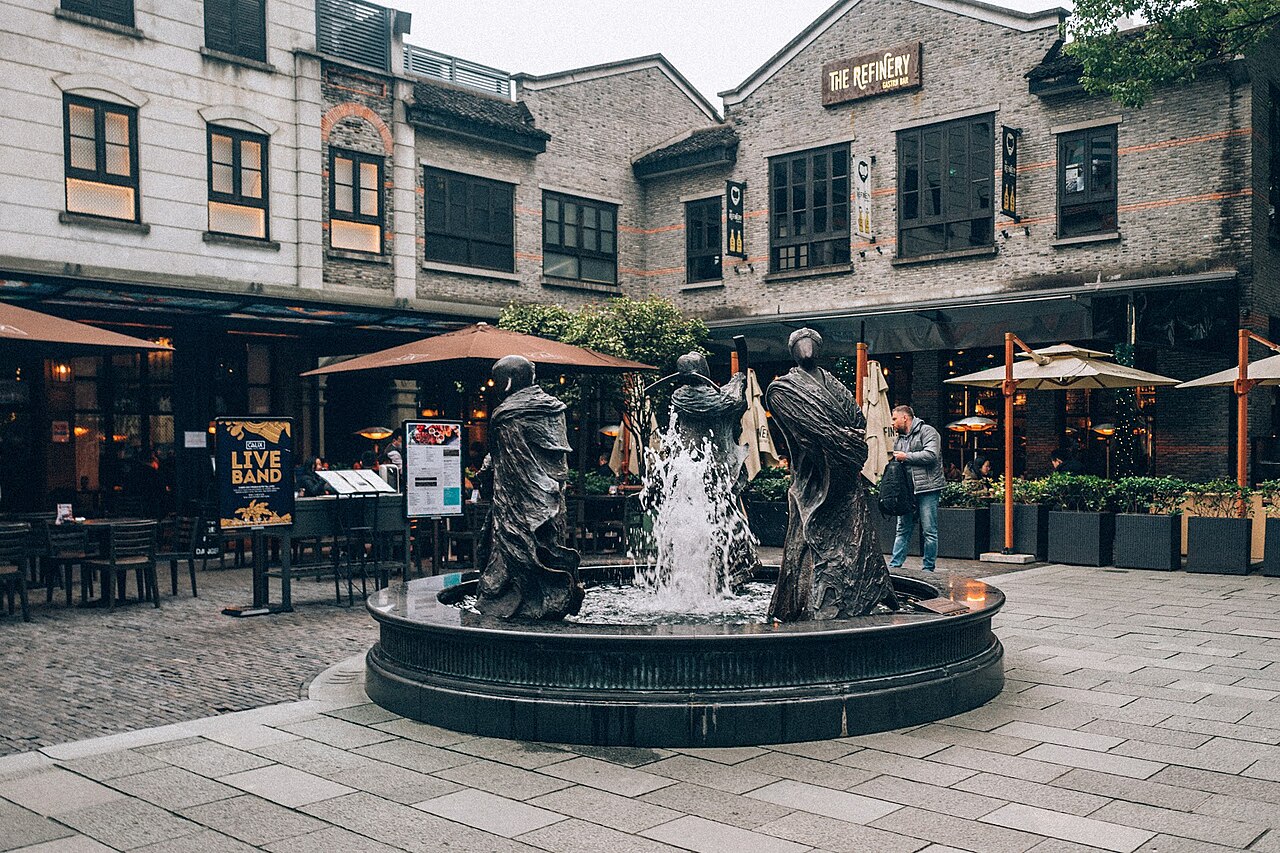
Photo: Wikimedia Commons, Leynadmar, open license.

Address: Lane 181 Taicang Road, Huangpu District (上海市黄浦区太仓路181弄).
Nearest metro: Xintiandi Station (新天地站) or South Huangpi Road Station (黄陂南路站).
Zhujiajiao Ancient Town (朱家角古镇)
Zhujiajiao Ancient Town (朱家角古镇) sits beside Dianshan Lake (淀山湖) in Qingpu District (青浦区). It developed from the Song period and became a prosperous Jiangnan water town over the following centuries. It is often nicknamed "Shanghai's Venice" (上海的威尼斯). In 1991 it was named one of Shanghai's four famous historical and cultural towns (上海四大历史文化名镇), in 2004 it became a national AAAA-level tourist attraction (国家AAAA级旅游景区), and in 2007 it was listed among China's historical and cultural towns (全国历史文化名镇).
The Caogang River (漕港河) divides the old town into north and south sections. Houses sit along the water, with white walls, dark roof tiles, Ming and Qing-style architecture, old lanes, and canals forming the classic Jiangnan water-town scene. The town has nine old streets, many Ming and Qing buildings, and 36 old bridges.
Important sights include North Street (北大街), often described as one of Shanghai's best-preserved Ming and Qing commercial streets; Fangsheng Bridge (放生桥), the town's landmark five-arch stone bridge; Kezhi Garden (课植园), a large private garden built from 1912 over about 15 years; and the former Qing Dynasty Post Office (大清邮局旧址), where visitors can still buy postcards and use a special Zhujiajiao postmark.
The old-town street area is free, but current visitor control requires reservation. Ticketed inner sights, boat rides, and exhibitions may charge separately.
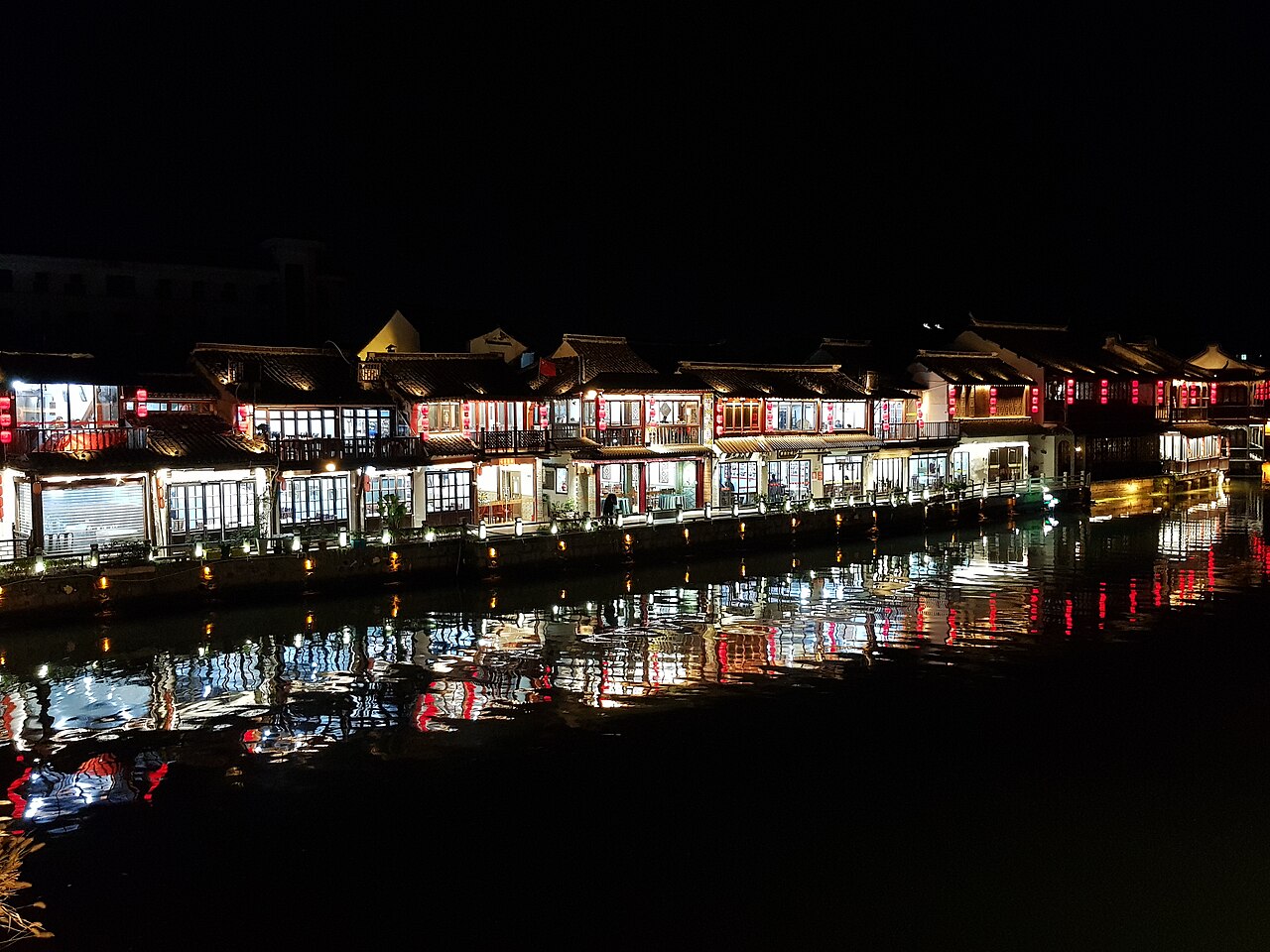
Photo: Wikimedia Commons, Woong Deewaa, open license.

Address: Zhujiajiao Town, Qingpu District (上海市青浦区朱家角镇).
Nearest metro: Zhujiajiao Station (朱家角站), Shanghai Metro Line 17 (地铁17号线).
Peace Hotel (和平饭店)
The Peace Hotel (和平饭店) stands at the meeting point of the Bund (外滩) and Nanjing Road (南京路). Its 19-meter dark green pyramidal copper roof makes it one of the most recognizable buildings in the Bund's historic architecture group.
The hotel consists of two buildings. The North Building (北楼) was completed in 1929 by Sir Victor Sassoon (维克多·沙逊), a British-Jewish businessman in Shanghai. It was originally the Cathay Hotel (华懋饭店), built at a cost often described as 5 million taels of silver. It combined Chicago School Gothic influence with Art Deco (装饰艺术) style and was once known as the "Number One Building in the Far East" (远东第一楼).
The South Building (南楼) was completed in 1906 as the Palace Hotel (汇中饭店). Today it is associated with the Swatch Art Peace Hotel (斯沃琪和平饭店艺术中心) and remains one of the oldest surviving buildings on the Bund.
The first-floor lobby is generally viewable without a reservation, but this is still an operating luxury hotel. Access may be limited during events, security controls, or busy periods. For a deeper visit, consider an official paid tour, a restaurant reservation, afternoon tea, or the famous jazz bar.
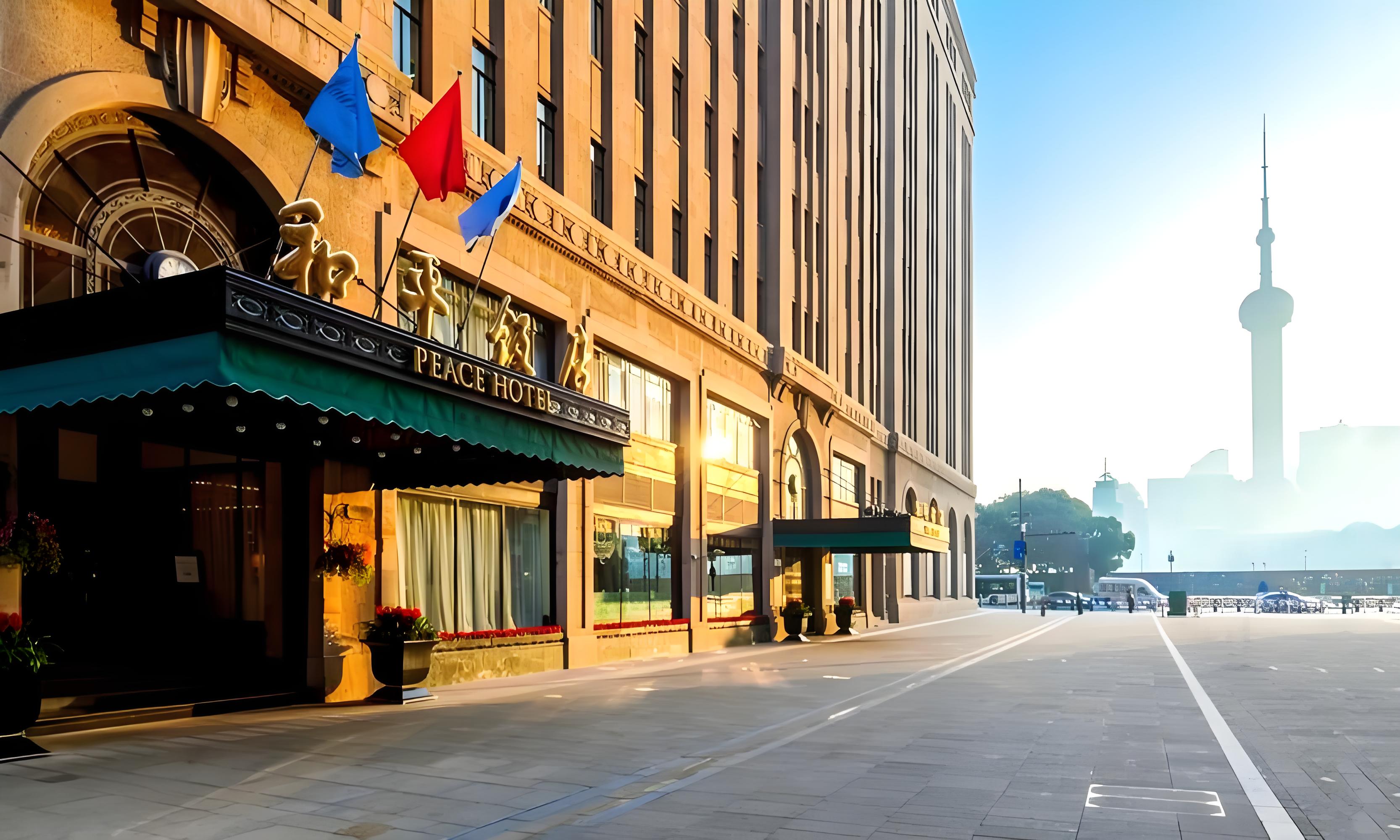
Photo: Local reference image provided for this guide.
Address: No. 20 Nanjing East Road, Huangpu District (上海市黄浦区南京东路20号).
Nearest metro: East Nanjing Road Station (南京东路站).
Shanghai Museum (上海博物馆)
Shanghai Museum (上海博物馆) was founded in 1952 and is one of China's most respected museums of ancient art. It is especially famous for bronzes, ceramics, calligraphy, painting, jade, coins, and furniture, and is often praised as containing "half of Chinese art history" (半部中国艺术史).
The museum now has two major branches. The People's Square Branch (人民广场馆) sits on the south side of People's Square (人民广场). Its building uses a square base and round roof to suggest the old Chinese cosmological idea of a round heaven and square earth (天圆地方). Its collection includes more than 1.02 million objects across 31 categories. Its bronze collection is especially famous, with major pieces such as the Da Ke Ding (大克鼎) and Da Yu Ding (大盂鼎).
The East Branch (东馆), on Century Avenue (世纪大道) in Pudong (浦东), opened as a modern museum facility in 2024. It introduces more digital and interactive displays, including galleries for ancient Chinese bronzes, jade, and ceramics, plus interactive archaeology experiences for younger visitors. Check current branch status before you go, because opening arrangements can change.
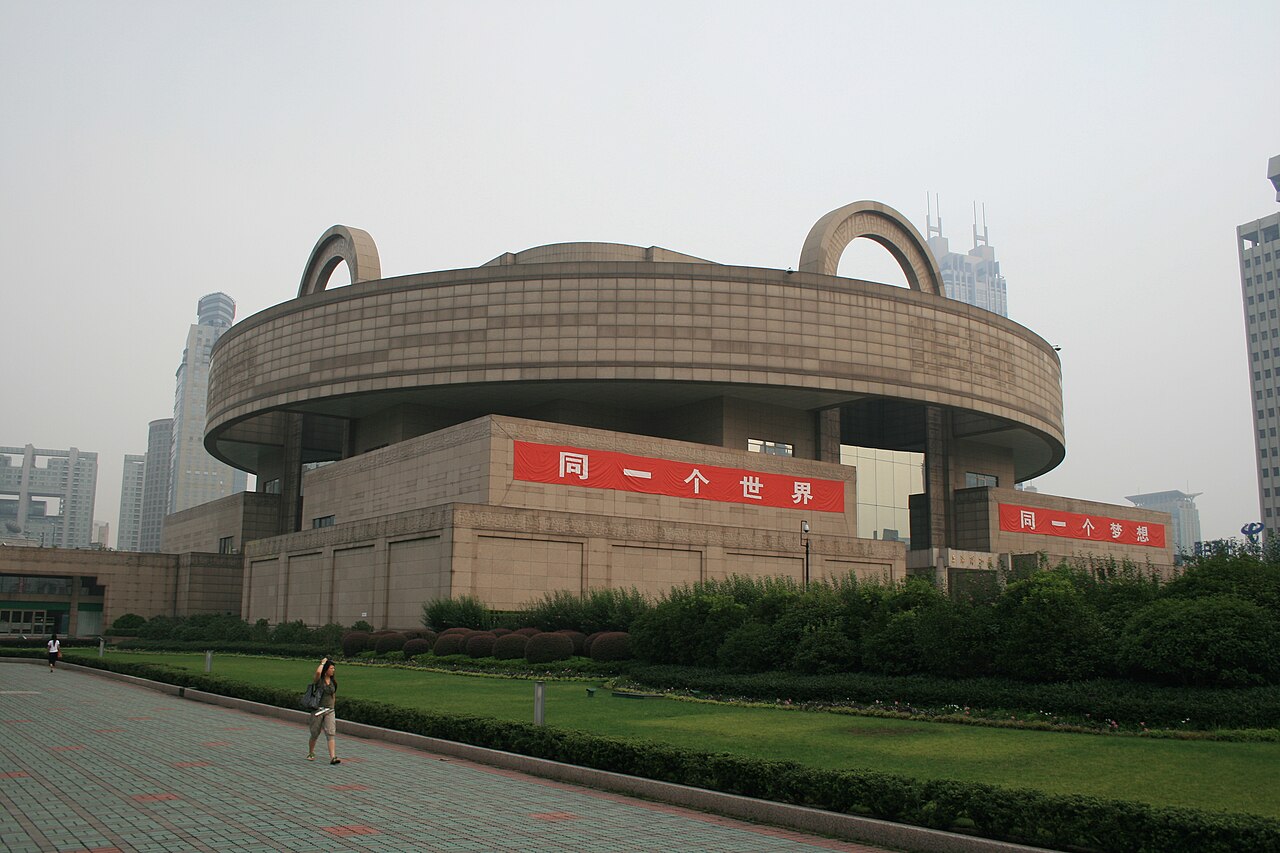
Photo: Wikimedia Commons, Gary Todd, open license.

Addresses: People's Square Branch (人民广场馆), No. 201 Renmin Avenue, Huangpu District (上海市黄浦区人民大道201号); East Branch (东馆), No. 1952 Century Avenue, Pudong New Area (上海市浦东新区世纪大道1952号).
Nearest metro: People's Square Station (人民广场站) for the People's Square Branch; Shanghai Science and Technology Museum Station (上海科技馆站) or Century Avenue Station (世纪大道站) for the East Branch.
Shanghai Natural History Museum (上海自然博物馆)
Shanghai Natural History Museum (上海自然博物馆), a branch of Shanghai Science and Technology Museum (上海科技馆), is one of China's largest natural-history museums. It sits inside Jing'an Sculpture Park (静安雕塑公园).
The building is inspired by the spiral form of a shell. Its theme is nature, people, and harmony (自然·人·和谐). The museum has nearly 300,000 specimens covering paleontology, zoology, botany, anthropology, and related fields.
This is one of the best indoor choices in Shanghai for families, science lovers, and bad-weather days. Booking and closing-day rules can change, so use the official museum account or ticketing system for the exact date.
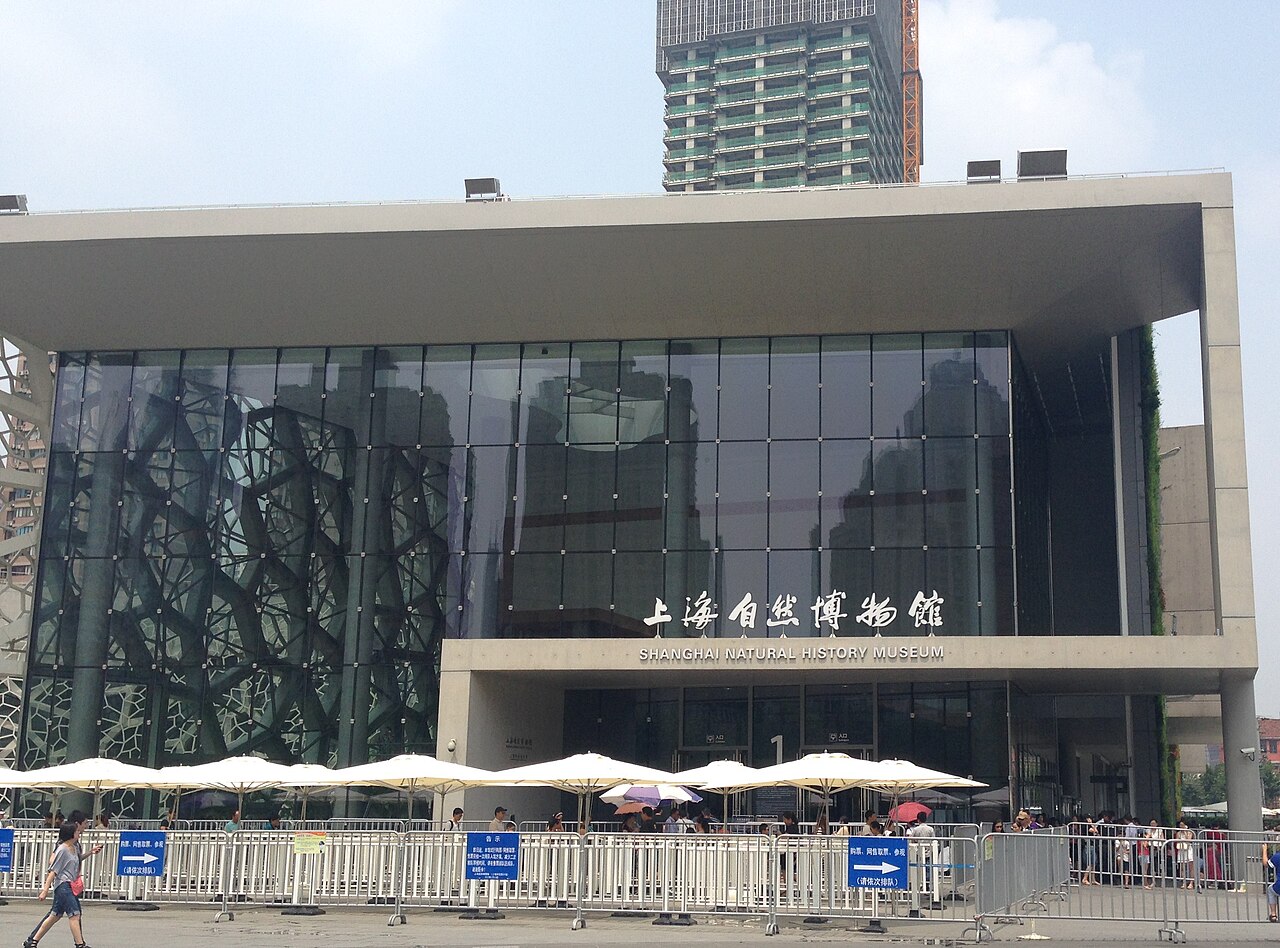
Photo: Wikimedia Commons, SSYoung, open license.

Address: No. 510 Beijing West Road, Jing'an District, inside Jing'an Sculpture Park (上海市静安区北京西路510号,静安雕塑公园内).
Nearest metro: Natural History Museum Station (自然博物馆站), Shanghai Metro Line 13 (地铁13号线).
Fudan University (复旦大学)
Fudan University (复旦大学) is one of Shanghai's best-known universities. Its name comes from a classical phrase in Shangshu Dazhuan (《尚书大传》): "the sun and moon shine; day after day begins again" (日月光华,旦复旦兮). The name suggests self-renewal, perseverance, and the pursuit of light.
Fudan has four main campuses: Handan Campus (邯郸校区), the historic main campus; Jiangwan Campus (江湾校区), used by units such as the law school; Fenglin Campus (枫林校区), associated with medical education; and Zhangjiang Campus (张江校区), linked with pharmacy and microelectronics.
For first-time visitors, Handan Campus (邯郸校区) is the usual choice. It includes classic campus gates, statues of Mao Zedong (毛泽东像) and mathematician Su Buqing (苏步青像), Xianghui Hall (相辉堂), the old gate, the university motto wall, Xiyuan Garden (曦园), Yanyuan Garden (燕园), the Fudan history museum (复旦校史馆), campus cafes, and Guanghua Tower (光华楼).
The nearby Daxue Road (大学路) area has cafes, boutiques, and bookstores, making it easy to combine a campus visit with a relaxed city walk. The ordinary campus access window is often treated as 06:00-22:00, but Fudan is a working university, not a tourist attraction. Gate policy can change for exams, events, security, or construction, so follow official visitor notices and gate staff instructions.
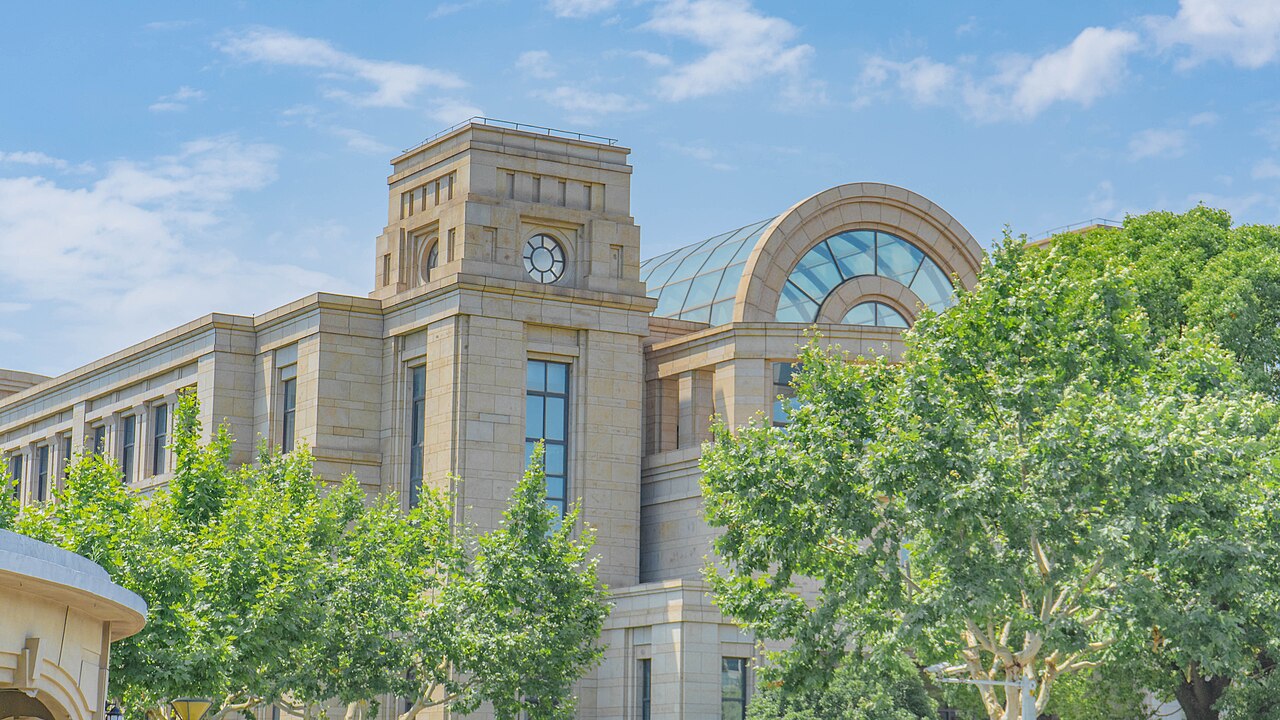
Photo: Wikimedia Commons, Prcmise, open license.

Address: Handan Campus, No. 220 Handan Road, Yangpu District (上海市杨浦区邯郸路220号,复旦大学邯郸校区).
Nearest metro: Wujiaochang Station (五角场站), Jiangwan Stadium Station (江湾体育场站), or Guoquan Road Station (国权路站), depending on the gate.
Duoyun Books Flagship (朵云书院旗舰店)
Duoyun Books Flagship (朵云书院旗舰店) sits on the 52nd floor of Shanghai Tower (上海中心大厦), about 239 meters above the ground. It is often described as a bookstore above the clouds (漂浮在云端的书院) and is among the highest commercial bookstores in the world.
The store covers about 2,200 square meters and uses two broad spatial themes: a white "landscape" area and a black "secret realm" area. Curved shelves, reflective surfaces, and cloud-like installations create a highly visual reading space. The central area is about 8 meters high, giving the store an unusually open feeling for a bookstore.
The two sky-garden style viewing areas are part of its appeal. Haowang North Corner (好望北角) looks toward the Oriental Pearl Tower (东方明珠塔), Jin Mao Tower (金茂大厦), and Shanghai World Financial Center (上海环球金融中心). Haowang South Corner (好望南角) looks toward the Huangpu River (黄浦江) and Nanpu Bridge (南浦大桥). Check current reservation, elevator, and queue rules before going.
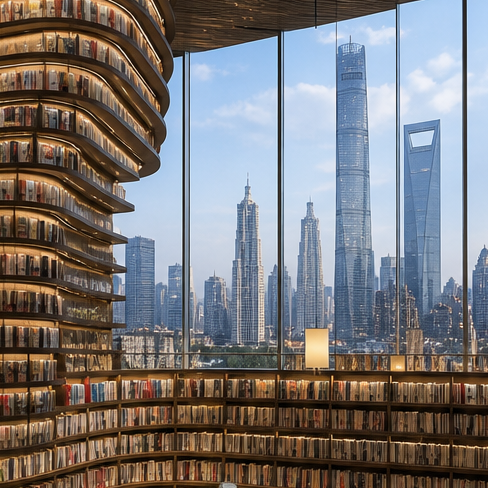
Image: AI-generated local attraction image, used as a stable visual reference.
Address: 52F, Shanghai Tower, No. 501 Yincheng Middle Road, Pudong New Area (上海市浦东新区银城中路501号,上海中心大厦52层).
Nearest metro: Lujiazui Station (陆家嘴站), Shanghai Metro Line 2 (地铁2号线).
Lu Xun Former Residence (鲁迅故居)
Lu Xun Former Residence (鲁迅故居) is the final Shanghai home of the writer Lu Xun (鲁迅). He moved here in April 1933 and lived here until his death on October 19, 1936, spending the last three and a half years of his life in this lane-house residence.
The house is a three-story red-brick lane residence. The ground floor includes the reception room and dining room. Lu Xun once planted peach trees, redbud, and oleander in the small courtyard. On the second floor, the south-facing room served as both bedroom and study. His simple iron bed and writing desk recall the daily setting where he wrote many essays. The third floor was used by his son Zhou Haiying (周海婴) and as guest space.
Many furnishings were donated by Xu Guangping (许广平), Lu Xun's partner, and the residence has been restored to resemble his living environment. The nearby Shanghai Lu Xun Memorial Hall (上海鲁迅纪念馆) has been under renovation since November 3, 2025, and its reopening time has not yet been confirmed. Check the official account before planning both sites together.
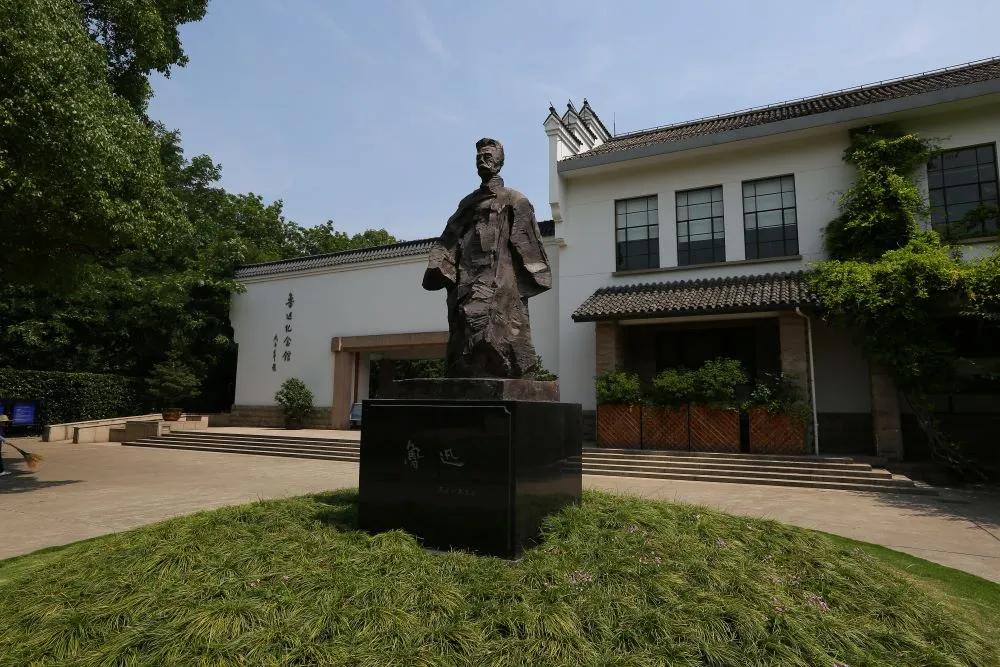
Photo: Local reference image provided for this guide.
Address: No. 9, Lane 132 Shanyin Road, Hongkou District (上海市虹口区山阴路132弄9号,大陆新村).
Nearest metro: Dongbaoxing Road Station (东宝兴路站), Hongkou Football Stadium Station (虹口足球场站), or Youdian Xincun Station (邮电新村站), depending on your walking route.
Shanghai Duolun Museum of Modern Art (上海多伦现代美术馆)
Shanghai Duolun Museum of Modern Art (上海多伦现代美术馆) is part of the Duolun Road (多伦路) cultural area in Hongkou District (虹口区). Duolun Road is strongly associated with modern Chinese literary history, left-wing writers, publishing culture, and the old urban texture of north Shanghai.
The museum gives this literary street a contemporary-art anchor. Its exterior is visually distinct, and the surrounding area can be paired with Lu Xun Park (鲁迅公园), Lu Xun Former Residence (鲁迅故居), and other Hongkou literary-history stops. Exhibition schedules change, so check current opening information before you go.
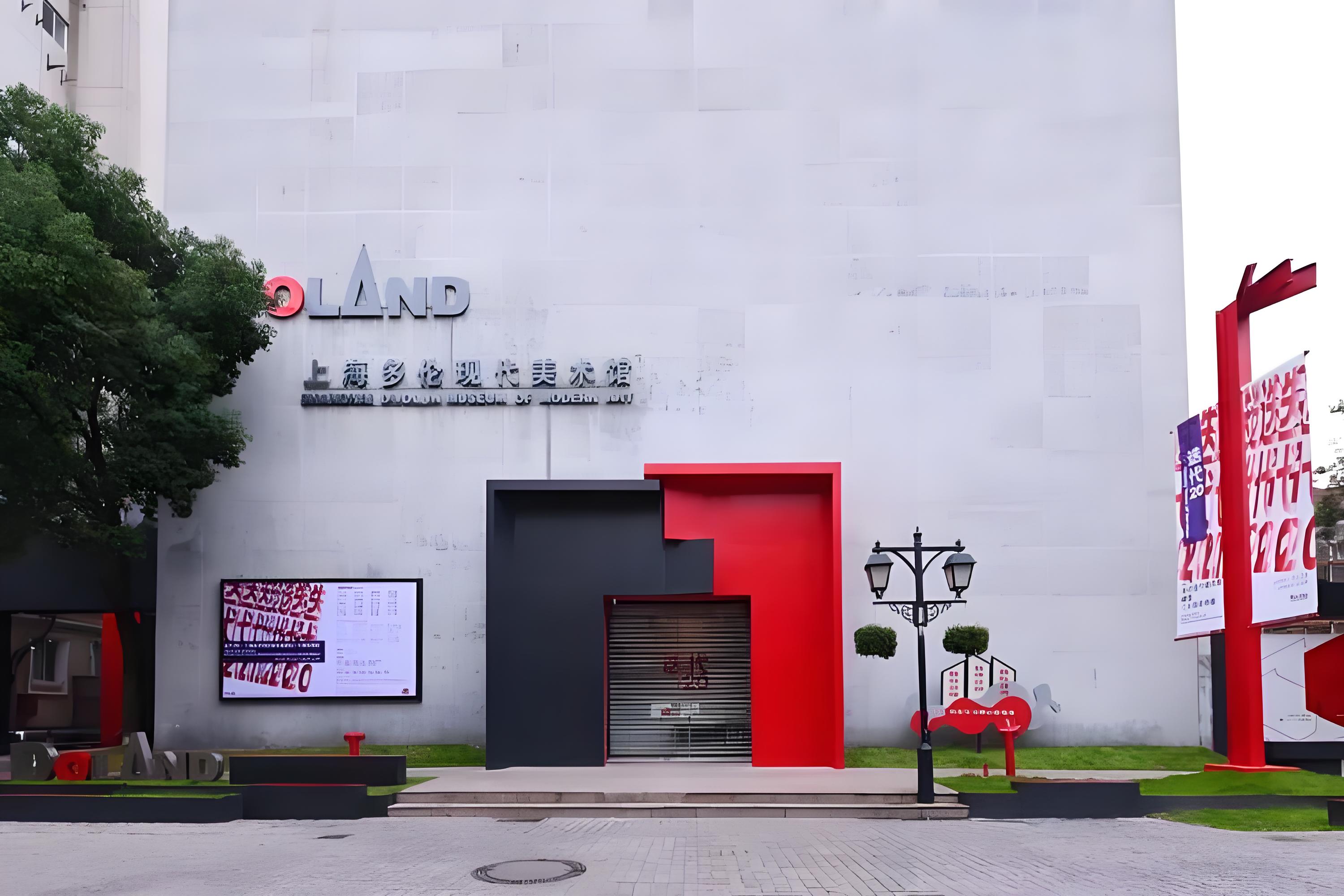
Photo: Local reference image provided for this guide.
Address: No. 27 Duolun Road, Hongkou District (上海市虹口区多伦路27号).
Nearest metro: Dongbaoxing Road Station (东宝兴路站) or Hongkou Football Stadium Station (虹口足球场站), depending on the route.
Jing'an Temple (静安寺)
Jing'an Temple (静安寺), also known as Jing'an Ancient Temple (静安古寺), is one of Shanghai's oldest Buddhist temples. Tradition says it was first built in 247 during the Chiwu reign of the Sun Wu state in the Three Kingdoms period (三国孙吴赤乌十年). It was originally called Hudu Chongyuan Temple (沪渎重元寺 / 沪渎玄寺).
In 1008, during the Northern Song dynasty, it was renamed Jing'an Temple (静安寺). In 1216, during the Southern Song dynasty, the temple was moved from the Wusong River area (吴淞江畔) to its present location near Nanjing West Road (南京西路). Because it predates the formal city of Shanghai, it is often described as part of the city's deep historical roots.
Today, the golden roofs and temple halls stand in sharp contrast with surrounding malls and office towers. It is a compact, central place to see the meeting of religious tradition and modern commercial Shanghai. Dress respectfully and check the current ticket and festival rules before entering.
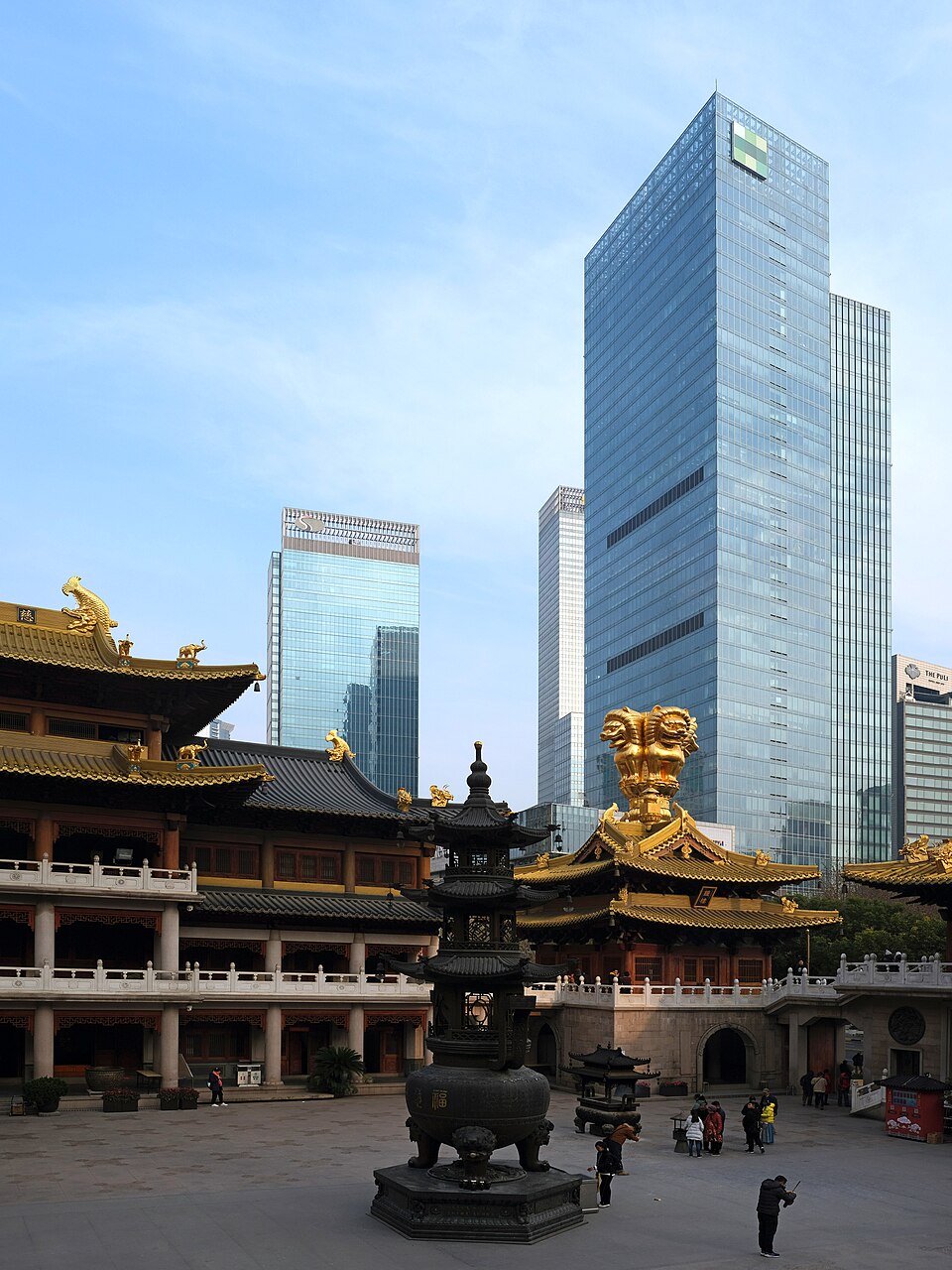
Photo: Wikimedia Commons, kallerna, open license.

Address: No. 1686 Nanjing West Road, Jing'an District (上海市静安区南京西路1686号).
Nearest metro: Jing'an Temple Station (静安寺站), Shanghai Metro Line 2, Line 7, and Line 14 (地铁2号线 / 7号线 / 14号线).
Tianzifang (田子坊)
Tianzifang (田子坊) is a lane-house creative and shopping area built from Shanghai-style shikumen buildings (石库门建筑). It preserves a more intimate lane atmosphere than large commercial districts and is popular with visitors who want small shops, cafes, casual snacks, and photography.
The area began as an ordinary street market and was later transformed into one of Shanghai's representative creative-lane destinations. You can find small design stores, vintage-style objects, handmade leather goods, cafes, bars, and casual food. For photographers, the brick walls, narrow lanes, old signs, and layered street scenes are the main attraction.
Tianzifang is best for a short, slow visit rather than a full-day plan. Public lanes and individual shops do not share one single opening schedule, so avoid treating it like a formal scenic area.
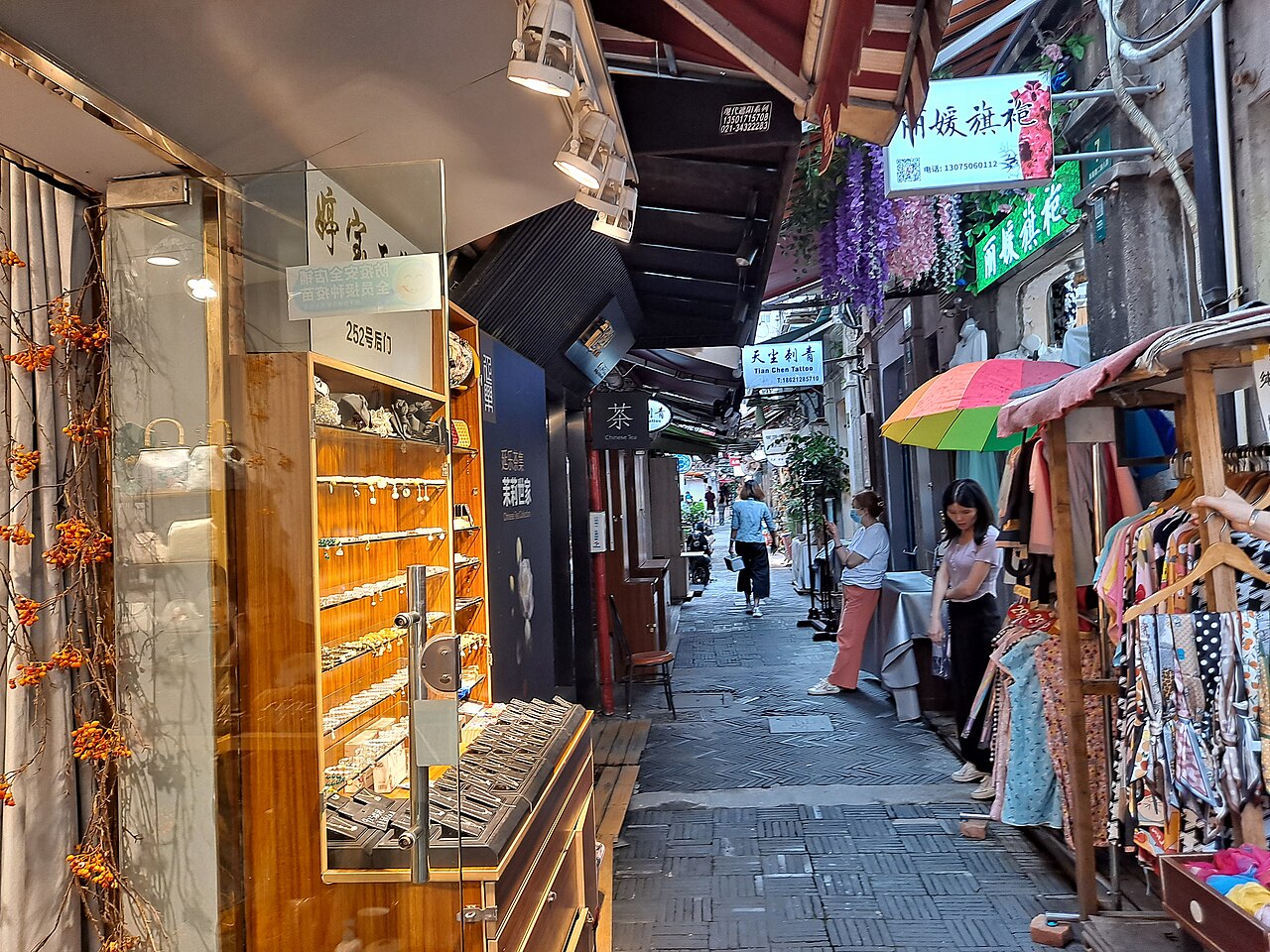
Photo: Wikimedia Commons, 钉钉, open license.

Address: Lane 210 Taikang Road, Huangpu District (上海市黄浦区泰康路210弄).
Nearest metro: Dapuqiao Station (打浦桥站), Shanghai Metro Line 9 (地铁9号线).
Sinan Mansions (思南公馆)
Sinan Mansions (思南公馆) began as a high-end residential area in the French Concession (法租界) in the 1920s. Its protected redevelopment was completed in 2010. It is one of central Shanghai's best examples of a preserved garden-villa neighborhood.
The area covers about 50,000 square meters and includes 51 historic protected buildings. You can see detached garden houses, linked garden villas, lane houses, arcade-style buildings, and modern apartments. This variety makes Sinan Mansions feel like a living museum of Shanghai's modern architecture (上海近代建筑博物馆).
Historical figures such as Zhou Enlai (周恩来), Mei Lanfang (梅兰芳), Liu Yazi (柳亚子), and Zeng Pu (曾朴) are associated with the area, giving it cultural depth beyond cafes and restaurants. Today it combines boutique hotels, shops, restaurants, offices, and quiet walking lanes. Public areas can be walked freely, but former residences and exhibitions have their own opening rules.
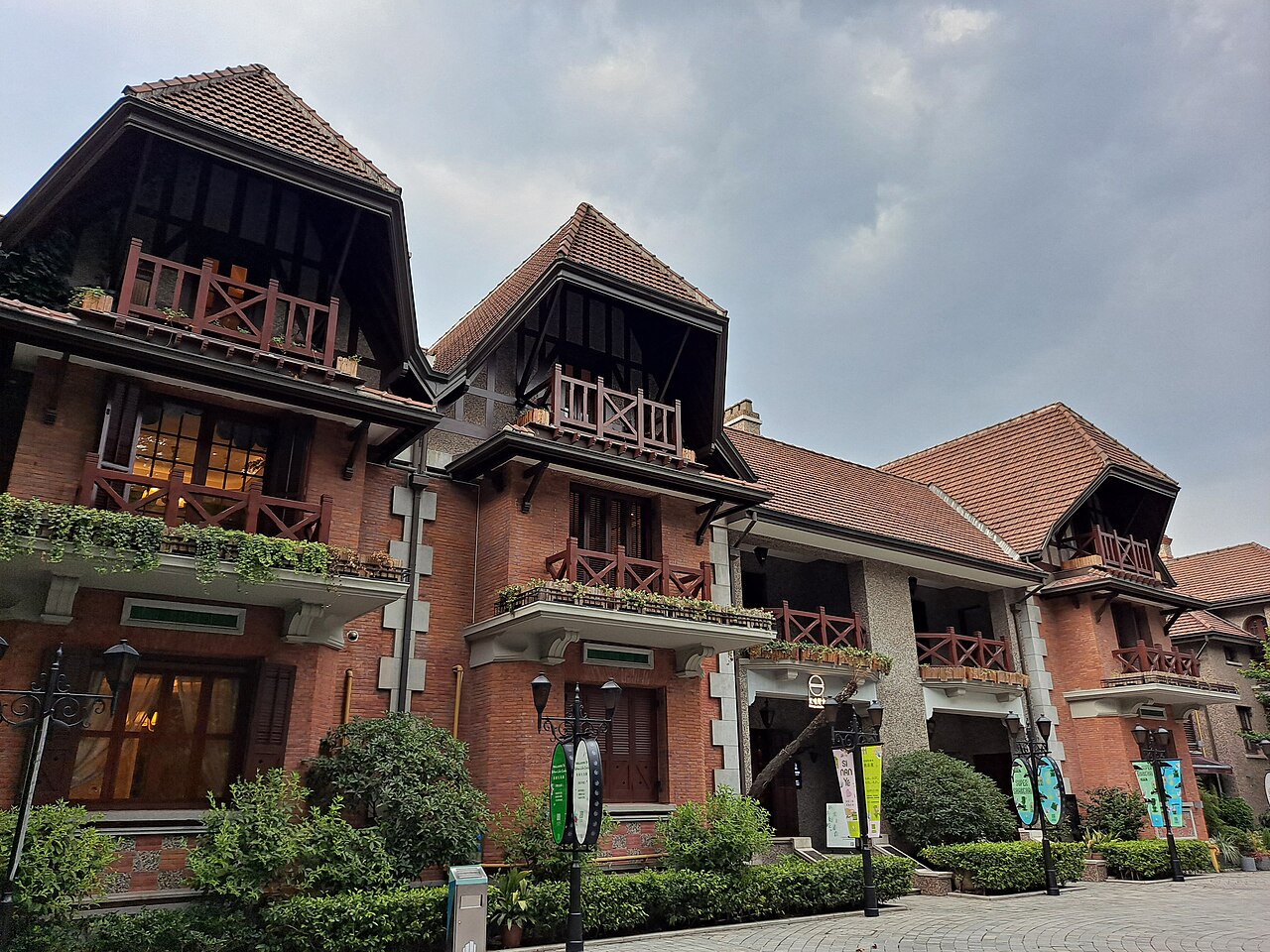
Photo: Wikimedia Commons, 钉钉, open license.

Address: Around Sinan Road and Fuxing Middle Road, Huangpu District (上海市黄浦区思南路 / 复兴中路一带).
Nearest metro: Xintiandi Station (新天地站) or South Shaanxi Road Station (陕西南路站).
Shanghai Disneyland (上海迪士尼乐园)
Shanghai Disneyland (上海迪士尼乐园) opened on June 16, 2016. It is the first Disney park in mainland China, the third in Asia, and the sixth Disney resort destination worldwide. In 2026, it marks its 10th anniversary with special celebration programming.
The park covers about 3.9 square kilometers and has the Enchanted Storybook Castle (奇幻童话城堡), one of the largest and most prominent Disney castles. Its lands include Mickey Avenue (米奇大街), Gardens of Imagination (奇想花园), Fantasyland (梦幻世界), Adventure Isle (探险岛), Treasure Cove (宝藏湾), Tomorrowland (明日世界), Toy Story Land (玩具总动员), and the world's first Zootopia-themed land (疯狂动物城主题园区), whose main ride is Zootopia: Hot Pursuit (疯狂动物城:热力追踪).
This is a full-day destination, not a quick city add-on. Check the official Shanghai Disney Resort app or website for date-based tickets, opening hours, passport requirements, showtimes, and transport before you commit.
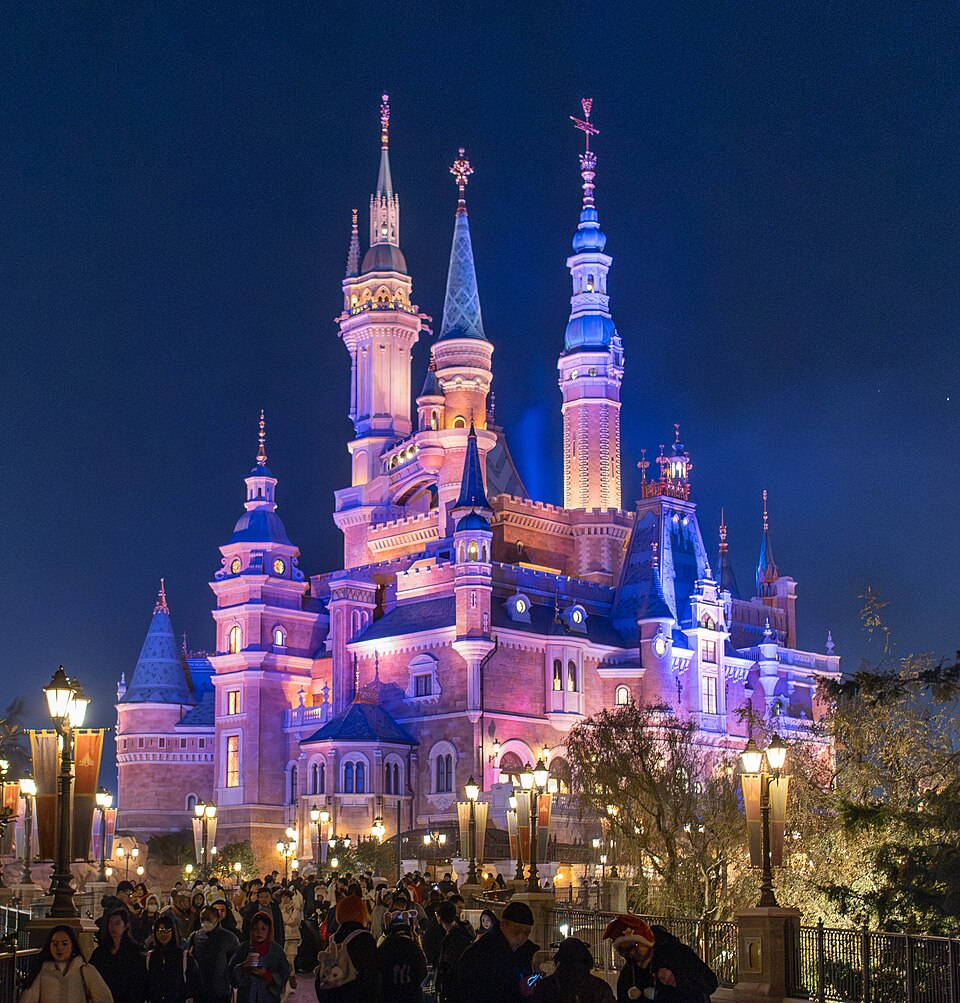
Photo: Wikimedia Commons, Memm, open license.

Address: No. 310 Huangzhao Road, Chuansha New Town, Pudong New Area (上海市浦东新区川沙新镇黄赵路310号).
Nearest metro: Disney Resort Station (迪士尼站), Shanghai Metro Line 11 (地铁11号线).
Getting Around Shanghai (上海交通)
The metro is the safest default for first-time visitors. The Bund (外滩), Nanjing Road Pedestrian Street (南京路步行街), People's Square (人民广场), and Yuyuan Garden (豫园) are easy to combine by walking and metro. Wukang Road (武康路), Sinan Mansions (思南公馆), Xintiandi (新天地), Tianzifang (田子坊), and Jing'an Temple (静安寺) can be grouped into more local city-walk days.
For farther places, plan more carefully. Zhujiajiao Ancient Town (朱家角古镇) needs Line 17 (地铁17号线) and extra time. Shanghai Disneyland (上海迪士尼乐园) needs Line 11 (地铁11号线) and a full-day schedule. Fudan University (复旦大学), Lu Xun Former Residence (鲁迅故居), and Shanghai Duolun Museum of Modern Art (上海多伦现代美术馆) are better grouped as a north Shanghai or Hongkou (虹口) day.
Practical Tips
- Save every destination name in both English and Chinese before leaving your hotel.
- Check current opening hours and reservation rules for museums, gardens, temples, and Disney.
- Use the metro for most cross-city movement; ride-hailing pickup points near the Bund, Yuyuan, and large malls can be crowded or controlled.
- Keep your passport original available for museums, ticketed sights, campus access checks, and real-name reservations.
- Do not overpack the day. Shanghai is strongest when you choose a neighborhood and let the city unfold around it.
Shanghai Orientation Map
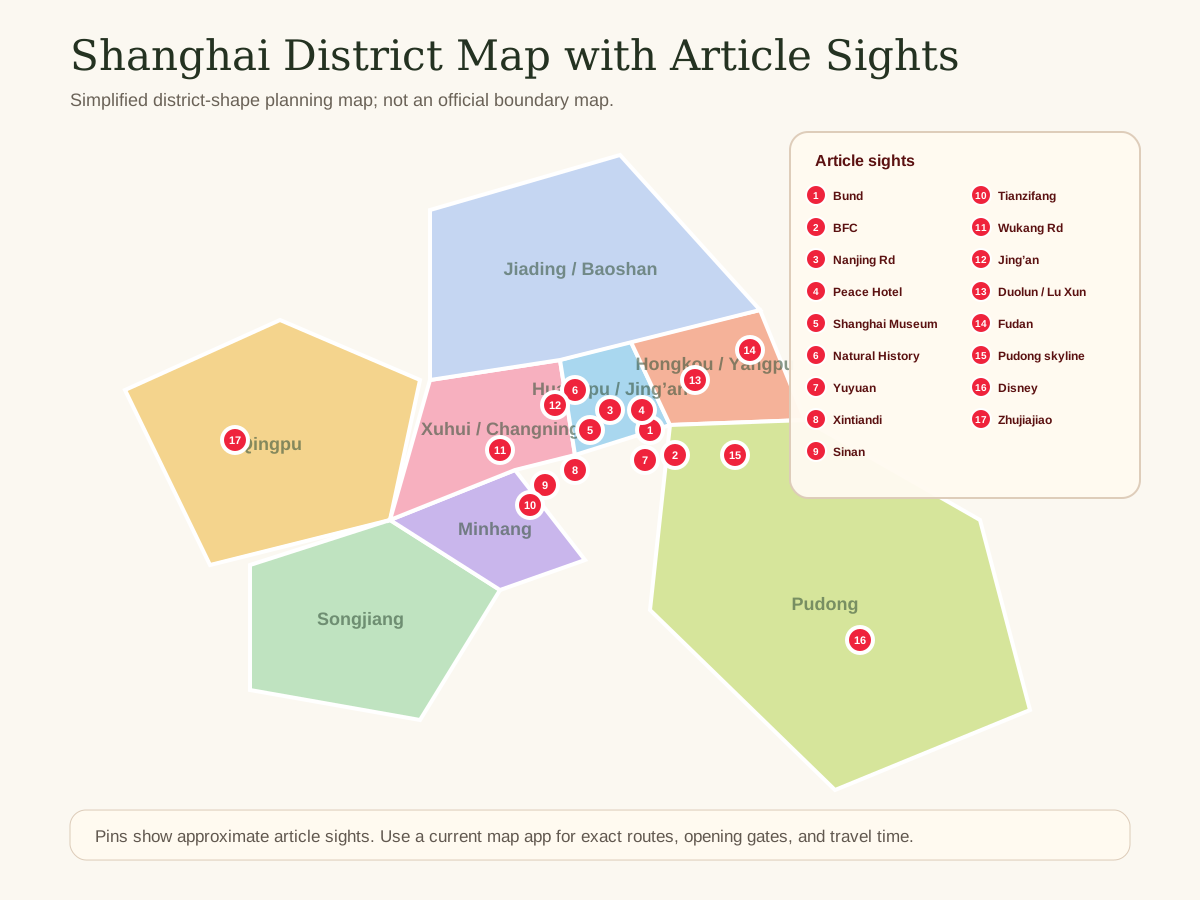
This is a planning map, not a navigation map. It groups the article's sights by rough area so travelers can judge which places are easy to combine in the same day.
Related Reading
Booking PDFs
Shanghai booking guides
Start with the complete city bundle, or choose only the single-attraction PDF you need.
Full city bundle
Shanghai Attraction Booking Process Bundle
All 16 Shanghai attraction booking-process PDFs in one combined guide.
Need only one attraction instead?
Choose a single booking PDF only when one attraction is the immediate priority.
Shanghai Museum Booking Guide
Branch, closure, passport, special-exhibition, and entry-day notes for Shanghai Museum.
$0.99
Get PDFShanghai Natural History Museum Booking Guide
Official ticketing, passport, time-slot, family-visit, and calendar-check notes.
$0.99
Get PDFShanghai Disneyland Booking Guide
Date-based ticket, passport, app, early-entry, crowd, and arrival notes for Shanghai Disneyland.
$0.99
Get PDFNanjing Road Pedestrian Street Guide
Free-street access, route boundaries, metro exits, shopping rhythm, and Bund pairing notes.
$0.99
Get PDFPeace Hotel Shanghai Guide
Lobby, jazz bar, hotel-access, photo, and Bund route notes for the Peace Hotel.
$0.99
Get PDFFudan University Visit Guide
Campus-access caution, regular 06:00-22:00 window, passport, and visitor-policy notes.
$0.99
Get PDFThe Bund Shanghai Guide
Free waterfront route, lighting caution, metro, ferry, and skyline-photo notes for the Bund.
$0.99
Get PDFSinan Mansions Guide
Open-lane, museum, bookstore, cafe, and former-residence notes for Sinan Mansions.
$0.99
Get PDFXintiandi Shanghai Guide
Open-district, museum-reservation, shopping, dining, and metro notes for Xintiandi.
$0.99
Get PDFZhujiajiao Ancient Town Booking Guide
Free-but-reservation-required entry, water-town route, metro, boat, and ticketed-site notes.
$0.99
Get PDFDuoyun Books Flagship Guide
Shanghai Tower bookstore access, reservation caution, elevator, cafe, and skyline-view notes.
$0.99
Get PDFWukang Road Architecture Walk Guide
Exterior-only architecture, Wukang Mansion etiquette, metro, cafe, and photo-route notes.
$0.99
Get PDFTianzifang Shanghai Guide
Open-lane access, shop-hour caution, metro, food, and crowd notes for Tianzifang.
$0.99
Get PDFYuyuan Garden Booking Guide
Inner garden, outer mall, City God Temple, lantern-season, passport, and official-channel notes.
$0.99
Get PDFJing'an Temple Booking Guide
Temple ticket, passport, festival-price caution, etiquette, metro, and entry notes.
$0.99
Get PDFLu Xun Former Residence Guide
Former residence access, small-group entry, passport caution, and Lu Xun Memorial Hall closure notes.
$0.99
Get PDFNext step
Need city booking help after choosing your route?
Compare city booking bundles for attraction reservations, passport-user notes, official-platform reminders, and day-of-entry checks.
Sources and reference checks
- https://english.shanghai.gov.cn/en-ScenicSpots/20231205/584672cc6d044eabb5f7f6fc9049a19f.html
- https://english.shanghai.gov.cn/en-ScenicSpots/20231205/dc76893b94c248d195eaf7f4d44c6597.html
- https://english.shanghai.gov.cn/en-ScenicSpots/20231218/596192f5f59048bbbc3fa54d92304e93.html
- https://english.shanghai.gov.cn/cmsres/46/46fb01aff21a41d48bd4ae57be8bbda9/3e350b415280adf5ba42fe7ee7ca866e.pdf
Conversation
Questions and comments
Share a question, correction, or reading note. Most comments appear automatically. Some are held briefly for review.
Need a private reply? Email chiyaoyaoya@gmail.com.
Loading comments...